As demands on data rates, signal quality, and thermal resilience continue to rise, traditional PCB materials are increasingly reaching their limits. Particularly in fields such as AI infrastructure, high-performance computing, the automotive industry, and aerospace, there is a growing need for materials that not only deliver outstanding electrical performance but also offer the highest long-term reliability. Modern EMC laminates address this need and lay the foundation for high-performance, durable next-generation PCBs.
The demands placed on high-speed and high-frequency designs are constantly increasing. Higher frequencies, more complex PCB structures, and rising thermal loads call for materials that enable both electrical and mechanical peak performance. Many of the materials used to date have been unable to achieve a balance between low signal loss and high thermal stability. In addition to technical properties, EMC’s long-term technology roadmap also played a decisive role in the selection of materials.
EMC Laminates: The Answer to Increasing Demands
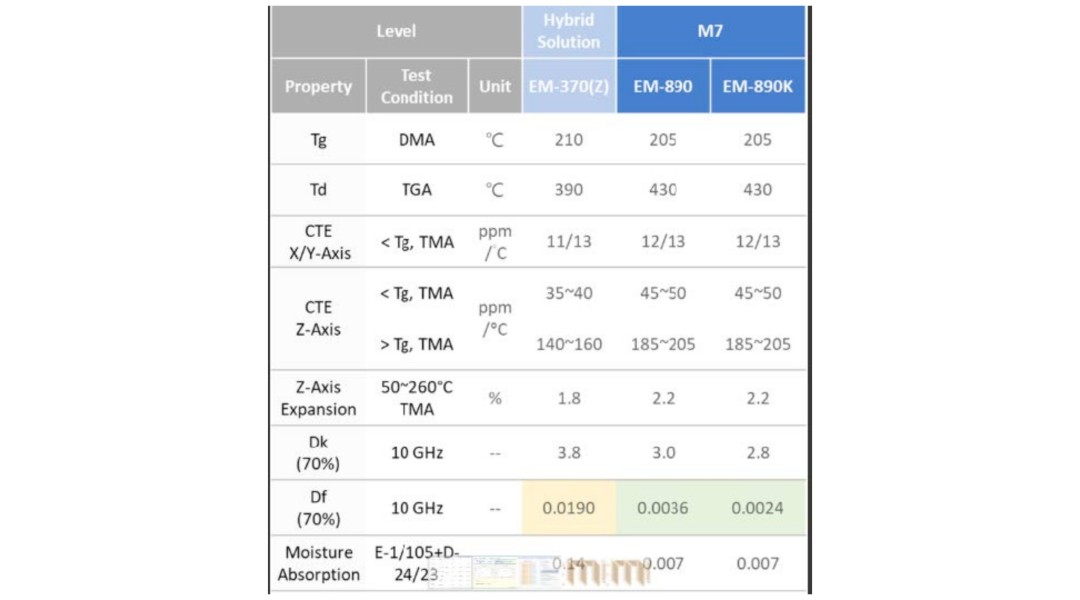
Today, EMC is one of the leading manufacturers of modern, high-performance materials for printed circuit boards and offers a broad portfolio for demanding applications. In particular, the materials EM 370(5) & (Z) and EM 890/K have proven to be high-performance solutions in internal tests. They ensure significantly improved thermal stability through higher Tg and Td values while also delivering stable electrical properties.
Maximum reliability for high-speed and multilayer designs
A key advantage lies in its high CAF resistance and its extremely stable Dk and Df values. This is essential, particularly in high-speed designs, to ensure consistent signal integrity. At the same time, the low CTE value along the Z-axis significantly reduces the mechanical stress on through-hole (PTH) vias. This significantly lowers the probability of via failures during lead-free reflow processes.
EMC materials also offer clear advantages for printed circuit boards with a high number of layers. The improved adhesion between the resin and the glass fabric minimizes the risk of delamination and increases the long-term reliability of the entire component. Especially under continuous thermal and mechanical stress, these high-performance materials maintain their structural stability and reliably prevent microcracking. This ensures high operational reliability even under continuous 24/7 stress in data centers or demanding industrial environments.
Applications in AI infrastructure, high-performance computing, automotive electronics, and the aerospace sector benefit most from these properties. As frequencies increase, low-loss materials such as EM 890/K or EM 892K/K2 become indispensable for high-speed digital and RF applications to ensure stable, high-speed data transmission. At the same time, EM 370(Z) is ideally suited as a hybrid solution for complex multilayer designs with high reliability and safety requirements.
Optimized signal integrity and greater design flexibility
EMC materials also offer measurable benefits in the area of signal integrity. The EM 89X series minimizes Dk and Df values and allows extremely precise impedance control through optimized resin systems and suitable glass fabric options. This reduces signal loss, improves data transmission, and simultaneously reduces the need for active signal compensation.
In addition, the material technology opens up new possibilities for design flexibility and stack-up optimization. The excellent flow properties and high mechanical strength of these high-performance laminates enable thinner prepregs and core layers without compromising reliability. This allows for more compact HDI structures and optimized trace routing. Developers can implement more complex multilayer designs while meeting the increasing demands for miniaturization in modern electronics.
These materials also have a direct impact on process stability, yield, and reproducibility during the manufacturing process. The increased material requirements demand precise control of lamination, temperature management, and processing. At the same time, the laminates used help reduce process variations and ensure consistently high signal and product quality. Close coordination between development and manufacturing further improves reproducibility and supports high yield in serial production.
From development to validated production readiness
Varioprint supports customers early in the design process with the selection and implementation of suitable high-performance materials. Factors such as frequency range, signal routing, shielding, and thermal requirements are specifically taken into account. In addition, Varioprint works closely with development departments and assembly teams to make design adjustments, test prototypes, and minimize potential sources of interference at an early stage. This helps shorten development times and efficiently meet demanding customer requirements.
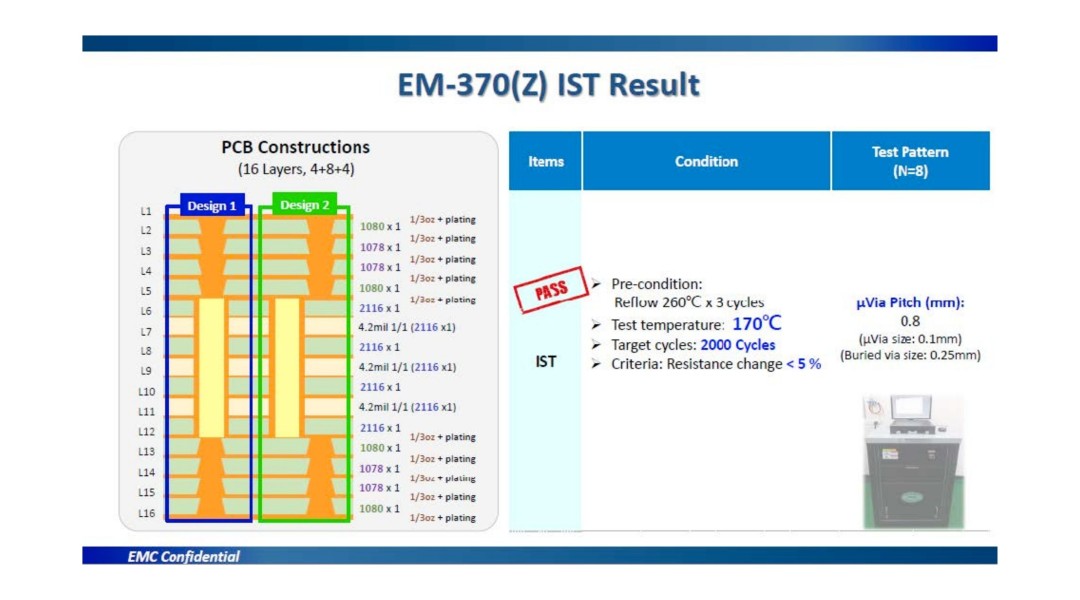
The high quality and reliability of the materials are further confirmed by extensive testing. EMC laminates not only meet the IPC 4101 standards but significantly exceed them in many areas. Internal benchmarks and independent laboratory tests show outstanding results in HAST and CAF tests with runtimes exceeding 1,500 hours. In interconnect stress testing and D-coupon tests as well, the materials demonstrated their high resilience and resistance to multiple lead-free reflow cycles.
Practical applications also confirm the performance of EMC materials. In a real-world electronics project, the reliability of a system was significantly improved through the use of these materials. A particularly decisive factor was that the IST tests were successfully completed over 1,000 cycles, thereby confirming the high long-term stability of the printed circuit boards.
EMC laminates offer a high-performance solution to the growing demands of modern electronic systems. They combine low signal loss with high thermal and mechanical stability, thereby creating optimal conditions for reliable high-speed applications. Especially in safety-critical and data-intensive applications, these materials make a decisive contribution to durable and future-proof printed circuit board solutions.